What is digitalization trends?
The digitalization trends use new technologies such as cloud computing, Internet of Things (IoT) to transform business into a digital version. Alongside automation of giant companies during the uncertain economy, the discussions of digitalization have been brought up in the recent year. However, the trends actually arise from individual participants after the pandemic when the break-even point of supply and demand is rebalanced.
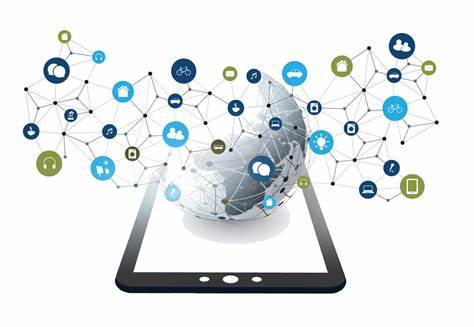
Our world is feeling the changes ever than before. Smart city, a concept that involves electronic system, traffic system, water supplies, utilities, and institutions etc, use digital technology to monitor, analyze, plan, and govern the city. Technologies such as digital twin and 3D modeling enable us to create virtual simulations of the real-world physical product, system, or process. Through these technologies, we’ve explored the inter-connections and digital boundaries.
To differentiate the digitalization from another utopia, we could not avoid talk about Generative AI. The pre-trained data model causes as much panic as curiosity. Generally speaking, the impact of generative artificial intelligence is highly dependent on the data set which is used to train the model. The data privacy issue has been a major concern, even though tools like ChatGPT is not customized to provide diversified responses, it is almost hard to control how the data input could be used. Embrace the challenge? More APIs perhaps could be connected for business use. Luckily, we have a sophisticated but well-rounded intellectual property system to protect business values. Avoid the issue? Working people should learn to use ChatGPT to facilitate their daily work. It is not a bad idea to start structuralizing your work and creating your own knowledge system. Harvard Business Review predicts that project management, creative work, and customer service will be transformed typically as examples of interactions of human + machine dynamic. The future work is going to reward more to create business values among the top common concerns such as world-felt mild recession, geopolitics, and cross-border wealth transformation.
What are tools for digitalization?
There are a variety of tools in facilitating digitalization. We could get a clearer picture of digitalization by breaking down its tool kits, such as cloud computing, internet of things, AI/ML, and AR/VR.
- Cloud Computing:
Refers to on-demand internet delivery of compute, database storage, application, and other IT resources; There are 3 service models — Infrastructure as a service (IaaS), Platform as a service (PaaS), and Software as a service (SaaS); It uses a pay-as-you-go pricing model and can be deployed at different environment (private, public, community, or hybrid etc) due to the privacy and security needs.
- Internet of Things (IoT):
An application of IoT is “smart home”, including devices and appliances (such as lighting fixtures, thermostats, home security systems, cameras, and other home appliances) that support one or more common ecosystems, and can be controlled via devices associated with that ecosystem, such as smartphones and smart speakers. Another application is self-driving cars and enhanced traffic systems.
- Artificial Intelligence/Machine Learning
- Augmented Reality/Virtual Reality
Why company needs digital transformation?
By research, industries such as IT services, Telecom, and Entertainment & Media have more maturity over digitalization based on the internal staff ratings. Financial services (asset management, banking, real estate etc), nevertheless, are deemed to be less digitally mature by the internal reviews (<The Technology Fallacy>). The ratings are subjective to the internal staffs’ opinion over digitalization, hence reflecting a gap in real scenarios. From another perspective, the ratings could also reflect that the industries built on relationships, such as financial services, will still need to be improved in the digital transformation.
Currently, the companies see urgency to implement digitalization because they need to reduce cost and improve efficiency in their daily operations. During the ever-changing economy, the companies are also faced with challenges to boost sales by targeting the right audience with their products and services. Marketing and CRM tools are widely adopted by the companies to maintain their customer relationships and solicit new customers.
How to get prepared as an individual?
By taking the initiative, individual workers could expect that most of the repeated tasks in their daily work to be replaced by AI and machine learning. Take project management for example. The project managers nowadays create more business values by coordinating resources, hedging risks, and simplifying processes. The tasks of understanding user stories, sub-sprints, and tickets usually are time consuming, therefore, digitalization tools could ring in to help to prioritize these tasks. However, in the context of the large-scale cross-functional projects, the project managers are obligated to gain a better culture view and overall blueprint to align the expected benefits to the strategic goals of their projects.
In general, individuals need to prepare both their mindsets and skillsets ready for the uplifting trends of digitalization. Learning is a key to participate in creating our future:
- Mindsets: continuous learning; embrace changes and uncertainties
- Skillsets: interaction with Artificial Intelligence
Reference:
I. Harvard Business Review
II. IIBA Knowledge Hub
III. The Technology Fallacy: How People are the Real Key to Digital Transformation
 BA Online Tutor Services